
Abundant Fishing Waters - Coiba National Park
Fishing Around Coiba National Park
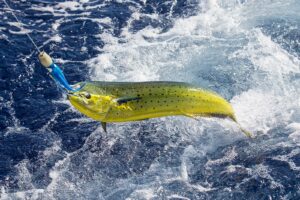 The Pacific waters surrounding Coiba are legendary among sport fishermen. Rocky coastlines, offshore banks, deep water, powerful currents and nutrient-rich upwellings create habitat for an extraordinary variety of fish—from hard-fighting Cubera Snapper and Roosterfish along the coast to Yellowfin Tuna, Sailfish and Marlin farther offshore.
But fishing around Coiba comes with an important responsibility: this is one of Panama’s most valuable protected marine environments. Coiba National Park and its Special Zone of Marine Protection contain important spawning, nursery and replenishment areas, and fishing is carefully regulated to protect the ecosystem.
For anglers, that combination makes Coiba remarkable. This is not simply a productive place to fish—it is an opportunity to experience a largely wild Pacific ecosystem where responsible fishing and marine conservation must exist side by side.
Why the Waters Around Coiba Are So Productive
Coiba lies in one of the most biologically productive parts of the Tropical Eastern Pacific.
Its islands sit near deep ocean water, while underwater banks, rocky reefs and changes in seafloor topography influence currents moving through the region.
In some areas, these currents bring colder, nutrient-rich water upward from depth. The nutrients stimulate biological productivity beginning with plankton and continuing through baitfish, larger predatory fish, sharks and other marine animals.
The result is an ecosystem capable of supporting both an exceptional diversity of species and some very large predatory fish.
Inshore Fishing
The rocky coastlines and nearshore waters of the Coiba region have long been associated with some of the Pacific’s most exciting inshore game fish.
Cubera Snapper are among the signature species. Powerful and aggressive, large Cubera often inhabit rocky structure where their combination of size and strength can make landing one particularly challenging.
Roosterfish are another iconic Eastern Pacific game fish. Their distinctive comb-like dorsal fin makes them instantly recognizable, and their speed and fighting ability have made them a favorite among visiting anglers.
Jacks, snook and other predatory species add variety around appropriate coastal environments.
Exactly where fishing is permitted is another matter. Many coastal areas within Coiba National Park are protected, and anglers should never assume that a productive-looking shoreline is legally open to fishing.
Cubera Snapper
Few fish are more closely associated with fishing around Coiba than the Cubera Snapper.
These powerful reef predators inhabit rocky structure and can reach impressive sizes. Their tendency to strike aggressively and immediately attempt to return to rocks makes them formidable opponents on rod and reel.
Cubera are also ecologically important predators within tropical reef and rocky-bottom communities.
Because large predatory fish can be particularly vulnerable to fishing pressure, responsible handling and adherence to current fishing regulations are essential.
Roosterfish
Roosterfish are one of the great prizes of Eastern Pacific inshore fishing.
They are found along tropical Pacific coastlines from Mexico through Central America and into South America, often hunting around beaches, rocky points and areas where baitfish concentrate.
The spectacular dorsal fin gives the species its name, but anglers remember Roosterfish just as much for their explosive strikes and powerful runs.
Unlike many offshore billfish and tuna, Roosterfish are closely associated with coastal habitat, making them part of the distinctly different inshore fishing experience found around Panama’s Pacific coast.
Offshore Fishing
Travel away from the islands and Coiba quickly transitions into a very different marine environment.
Deep Pacific water lies surprisingly close to the archipelago, allowing pelagic species to move within relatively short distances of the islands.
Depending on season and ocean conditions, offshore waters in the wider Coiba region can produce encounters with Yellowfin Tuna, Black Marlin, Blue Marlin, Pacific Sailfish, Dorado and Wahoo.
Unlike fish closely associated with a particular reef or shoreline, these pelagic species can travel enormous distances. Their presence changes with currents, water temperature, food availability and broader ocean conditions.
There is therefore no guarantee that a particular species will be present on a particular day—one of the realities, and attractions, of genuine offshore fishing.
Yellowfin Tuna
The sight of feeding Yellowfin Tuna can transform a quiet stretch of Pacific Ocean into sudden chaos.
Tuna frequently hunt schooling baitfish, sometimes driving prey toward the surface where birds and other predators join the activity.
Schools can range from smaller fish to substantially larger individuals, and powerful Yellowfin are capable of long, demanding fights.
The same productive ocean conditions that support tuna also attract dolphins, sharks and other pelagic predators, making offshore fishing trips an opportunity to observe the wider marine ecosystem as well as target game fish.
Marlin and Sailfish
Panama’s Pacific waters have a long international reputation for billfish.
Black Marlin, Blue Marlin and Pacific Sailfish can occur in the offshore waters surrounding the Gulf of Chiriquí and Coiba region.
These highly mobile predators follow favorable ocean conditions and concentrations of prey rather than remaining permanently at one location.
Historical fishing accounts from Coiba frequently describe exceptionally large Black Marlin, particularly around offshore structure such as Hannibal Bank.
Rather than promising a particular size or encounter, it is more accurate to say that Coiba lies within established billfish habitat capable of producing encounters with some of the Pacific’s most powerful pelagic predators.
Hannibal Bank
Few fishing locations in the Coiba region have acquired a reputation comparable to Hannibal Bank.
Located west of Isla Coiba, Hannibal Bank is not an island or conventional reef. It is a massive submerged underwater formation rising from much deeper Pacific water.
Currents encountering the bank can force nutrient-rich water toward the surface, stimulating biological productivity and concentrating marine life around the underwater structure.
Historically, these conditions made Hannibal Bank famous among sport fishermen for encounters with tuna, billfish and other large pelagic species.
But its productivity is precisely why Hannibal Bank is also extremely important for conservation.
Hannibal Bank Is More Than a Fishing Spot
Scientific and conservation assessments have identified Hannibal Bank as an important reproduction and replenishment area for marine species.
This means its ecological value extends far beyond the fish an angler might encounter there on a particular day.
Protecting spawning and replenishment areas can help sustain populations throughout a much larger marine ecosystem.
For this reason, Hannibal Bank has received particular attention from Panama’s conservation authorities, UNESCO and the International Union for Conservation of Nature.
Fishing regulations and protected zones around Hannibal Bank should therefore be taken especially seriously, and anglers should verify current rules before planning a trip.
Fishing Around Montuosa
Farther west, Montuosa Island rises from the open Pacific.
Like Hannibal Bank, Montuosa occupies an offshore environment influenced by deep water and strong currents. Historically, the surrounding waters became well known among anglers pursuing tuna, billfish and other pelagic species.
Montuosa is also an important conservation area. The island and its surrounding marine habitats receive specific protection within the Special Zone of Marine Protection.
That distinction matters. The fact that an area has historically been famous for fishing does not necessarily mean that every fishing activity historically practiced there remains permissible today.
Fishing and Marine Conservation
It may seem contradictory to describe Coiba as both an important fishing destination and one of Panama’s most important marine protected areas.
In reality, the two stories are closely connected.
The abundance that historically attracted fishermen exists because Coiba contains productive reefs, spawning areas, nursery habitat, deep-water environments and relatively intact marine food webs.
Overfishing those same habitats can undermine the ecological processes responsible for their productivity.
Modern management therefore attempts to balance permitted fishing activities with areas where extraction is restricted or prohibited.
Coiba National Park and the Special Zone of Marine Protection
Understanding fishing around Coiba requires understanding that there are different layers of protection.
Coiba National Park protects Isla Coiba, dozens of smaller islands and extensive surrounding marine habitat.
Beyond portions of the national park lies the Special Zone of Marine Protection, created to protect additional marine environments associated with the Coiba ecosystem.
Different zones can have different rules governing fishing, vessel activity and other uses.
Some areas allow certain regulated fishing activities, while other areas are designated for much stronger protection.
For visitors, the important point is simple: there is no single rule that makes fishing permissible everywhere around Coiba.
Fishing Regulations
Fishing regulations within Coiba and its surrounding protected marine areas have changed over time as Panama has strengthened management of the World Heritage property.
Rules may address matters such as:
- where recreational or sport fishing is permitted;
- areas where fishing is completely prohibited;
- seasonal closures;
- permitted fishing methods and gear;
- licensing and authorization requirements;
- protected or restricted species;
- catch limits or retention rules; and
- vessel monitoring and reporting requirements.
Do not rely on old fishing reports, archived websites or historical permit information when planning a trip. Regulations that applied several years ago may no longer reflect current management.
Before fishing anywhere within or near Coiba’s protected waters, anglers and vessel operators should confirm current requirements with the appropriate Panamanian authorities and use an experienced operator familiar with the regulations.
No-Take Zones and Replenishment Areas
Some marine habitats require greater protection than others.
No-take zones prohibit extraction so fish and other marine organisms can feed, grow and reproduce with reduced fishing pressure.
Replenishment areas are particularly important because they can help supply surrounding waters with new generations of fish.
UNESCO has repeatedly emphasized the need for strong protection of critical replenishment areas within the Coiba World Heritage property, including Hannibal Bank.
Seasonal closures can provide another conservation tool by reducing fishing pressure during particularly important reproductive periods.
Catch and Release
Even where sport fishing is legally permitted, responsible catch-and-release practices can help reduce the impact on important game fish populations.
Fish intended for release should be handled as little as possible and returned to the water quickly.
Keeping a fish in the water while removing hooks, using appropriate tackle to avoid unnecessarily prolonged fights and minimizing handling can improve the likelihood of survival.
Large predatory fish deserve particular care because they can take many years to reach maturity and play important ecological roles within marine food webs.
Fishing with an Experienced Local Operator
The complexity of Coiba’s protected waters makes local knowledge especially valuable.
An experienced fishing operator should understand not only where fish are likely to be found but also where fishing is permitted, which regulations apply and which areas must be avoided.
Operators familiar with the region also understand changing weather, currents, offshore sea conditions and the considerable distances involved in reaching remote fishing grounds.
Before booking, ask how the operator handles fishing permits, protected areas, catch-and-release practices and current regulations.
More Than Catching Fish
A fishing trip around Coiba can be remarkable even when the fish aren’t cooperating.
Dolphins may appear while traveling offshore. Sea turtles surface between islands. Seabirds can reveal concentrations of baitfish, while whales may be encountered seasonally in the wider Gulf of Chiriquí.
Above the water, forested islands remain almost completely undeveloped. Beneath it lies an ecosystem of reefs, rocky formations, deep water and underwater banks.
That surrounding wilderness is what distinguishes fishing near Coiba from fishing in a more heavily developed coastal destination.
Protecting Coiba’s Fishing Future
Coiba’s reputation for exceptional fishing was built on abundance.
Maintaining that abundance requires protecting the habitats and ecological processes that produce it.
That means respecting no-take zones, seasonal restrictions and protected species. It means using appropriate fishing methods, releasing fish responsibly when required or appropriate, and supporting operators who treat conservation as part of the fishing experience rather than an inconvenience.
The goal isn’t simply to preserve fishing for the next season. It is to protect an ecosystem capable of supporting healthy populations of predators and prey for generations.
Experience the Pacific Around Coiba
From powerful Cubera Snapper along rocky Pacific habitat to Yellowfin Tuna and billfish moving through deeper offshore waters, the Coiba region offers an extraordinary range of fishing environments.
But the greatest attraction is the ecosystem itself.
Fishing around Coiba provides an opportunity to experience one of the Tropical Eastern Pacific’s great marine wilderness areas—and responsible anglers have an important role in helping keep it that way.
Always confirm current fishing regulations, permits, protected zones and seasonal restrictions before your trip.
Explore More Things to Do in Coiba → | Discover Hannibal Bank → | Explore Tours to Coiba National Park →