
Marine Conservation - Coiba National Park
Marine Conservation in Coiba National Park
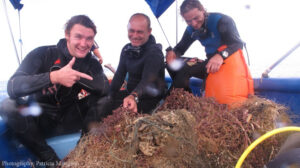 Protecting Coiba National Park means protecting far more than beautiful islands and coral reefs. The surrounding Pacific forms an enormous interconnected marine ecosystem where sharks, rays, sea turtles, whales, reef fish and pelagic species depend on habitats that stretch from shallow coastal waters to deep offshore environments.
Coiba’s marine biodiversity is one of the primary reasons the park and its Special Zone of Marine Protection were recognized as a UNESCO World Heritage Site.
But protection on a map is only the beginning.
Effective marine conservation requires science, enforcement, sustainable fisheries management, responsible tourism and cooperation between government agencies, communities, researchers, conservation organizations and the people who visit these waters.
A Globally Important Marine Protected Area
The Coiba World Heritage property protects an extraordinary expanse of the Tropical Eastern Pacific.
Coiba National Park itself encompasses approximately 270,125 hectares, most of which are marine. The adjoining Special Zone of Marine Protection adds approximately 160,700 hectares.
Together, the World Heritage property covers about 430,825 hectares, including Isla Coiba, 38 smaller islands and extensive surrounding Pacific habitat.
That scale matters because marine animals do not recognize the boundaries humans draw on maps.
A shark may move between reefs and offshore banks. A whale can migrate across international waters. A tuna may cross hundreds or thousands of kilometers of ocean.
Protecting enough habitat—and maintaining connections between protected areas—is therefore essential.
Why Coiba’s Marine Life Is Exceptional
Coiba sits in a remarkable transition zone where continental and oceanic marine environments meet.
Deep Pacific water lies relatively close to the archipelago, while islands, underwater ridges, rocky reefs and submerged banks interact with currents flowing through the region.
These physical conditions help create an exceptionally productive ecosystem.
UNESCO reports that the World Heritage property supports approximately 760 species of marine fish, 33 species of sharks and 20 species of cetaceans.
Sea turtles, rays, reef organisms, pelagic fish and countless marine invertebrates add to that diversity.
This abundance is precisely what marine conservation seeks to preserve.
Protecting an Ecosystem, Not Just Individual Species
Marine conservation can easily become focused on charismatic animals such as sharks, whales or sea turtles.
Those species matter enormously, but their survival depends on everything beneath them in the ecosystem.
Healthy predators require healthy populations of prey. Those prey depend on smaller organisms, reefs, mangroves, plankton and productive waters.
If one part of that ecological network deteriorates, the effects can spread throughout the food web.
Protecting Coiba therefore means conserving habitat, ecological processes and relationships between species rather than simply protecting a list of animals.
Coral Reefs and Rocky Marine Habitat
Coral communities are an important part of Coiba, but they represent only one component of a much more varied underwater landscape.
Rocky volcanic reefs, submerged ridges, sandy bottoms, deep slopes and underwater pinnacles all provide habitat.
Hard surfaces support corals, sponges, algae and other organisms while cracks and crevices provide shelter for fish and invertebrates.
Larger animals move between these habitats as they feed, reproduce or migrate.
Conservation planning must therefore protect the diversity of marine environments rather than concentrating only on the most visually spectacular reefs.
Bahía Damas Reef
Bahía Damas contains one of Coiba’s most important coral reef environments.
Its coral communities are valuable both ecologically and scientifically because Eastern Tropical Pacific reefs experience unusually dynamic environmental conditions.
Changes in temperature, currents and major climatic events such as El Niño can place corals under considerable stress.
Long-term research helps scientists understand which coral communities are resilient, how quickly damaged reefs can recover and what additional protection may improve their chances of survival.
Fishing Pressure
Fishing remains one of the most important conservation challenges facing Coiba.
The same productivity that supports extraordinary biodiversity also makes the region attractive to fishermen.
If fishing pressure exceeds the ability of populations to replenish themselves, the abundance that defines Coiba can gradually decline.
Large predators can be particularly vulnerable because many grow slowly, mature relatively late and produce fewer offspring than smaller species.
Removing large numbers of predators may also alter the structure of marine food webs.
Illegal Fishing
Illegal fishing creates an additional challenge because protected areas only work when regulations are enforced.
Unauthorized vessels, prohibited fishing gear and extraction from protected areas can undermine conservation efforts very quickly.
Panamanian authorities conduct marine patrols and increasingly use technologies such as vessel tracking and radar to identify suspicious activity within protected waters.
Enforcement efforts involve park rangers as well as cooperation between Panama’s environmental, fisheries, police and maritime-security authorities.
These patrols are not theoretical. Vessels continue to be intercepted when authorities detect fishing activity that violates protected-area rules.
Monitoring Coiba from Shore and Sea
Modern conservation increasingly combines traditional ranger patrols with technology.
Vessel movement can be monitored electronically, allowing authorities to identify unusual patterns such as prolonged low-speed movement inside restricted areas.
Radar and vessel-monitoring systems can then help direct patrol boats toward locations requiring investigation.
Technology cannot replace rangers, but it can make surveillance across hundreds of thousands of hectares of ocean much more effective.
Combined with boat patrols, inspections and enforcement actions, these systems help transform protected-area boundaries from lines on a chart into something that can actually be monitored.
No-Take Zones
One of the strongest tools available to marine conservation is the no-take zone.
Within a no-take area, fish and other marine organisms are allowed to feed, grow and reproduce without legal extraction.
Over time, well-managed no-take zones can help rebuild the abundance and age structure of fish populations.
Larger, older fish are particularly important because mature individuals can contribute disproportionately to reproduction.
Protected populations can also benefit surrounding areas when juvenile fish, larvae or adults move beyond the boundaries of the reserve.
Replenishment Areas
Some places are particularly valuable because they function as reproduction or replenishment areas.
Fish may gather at specific underwater banks, reefs or seasonal locations to reproduce.
If heavy fishing occurs precisely where and when those aggregations form, the impact can be much greater than ordinary fishing spread across a larger area.
Protecting these locations can therefore have benefits far beyond the immediate site.
UNESCO has repeatedly emphasized the importance of stronger protection for critical replenishment areas within the Coiba World Heritage property.
Hannibal Bank
Hannibal Bank is perhaps the best-known example.
This enormous submerged formation west of Isla Coiba rises from much deeper Pacific water and supports exceptionally productive marine habitat.
Historically, Hannibal Bank became famous for large fish and offshore sport fishing.
But scientific and conservation assessments have also identified it as an important replenishment area.
For that reason, UNESCO has repeatedly recommended stronger no-take protection for the Hannibal Bank Habitat Protection Zone.
Seasonal Fishing Closures
Permanent no-take zones are not the only option.
Seasonal closures can protect fish during particularly important periods of reproduction or aggregation.
A fishing area might therefore remain open during part of the year but close temporarily when certain species are most vulnerable.
UNESCO continues to encourage Panama to use seasonal closures in critical replenishment zones as part of strengthening fisheries management throughout the Coiba World Heritage property.
Coiba National Park and the Special Zone
The Coiba conservation landscape includes two important but distinct management areas.
Coiba National Park contains extensive marine habitat surrounding its islands.
The Special Zone of Marine Protection extends protection into additional surrounding waters.
Fishing regulations are not identical across every part of these areas.
UNESCO has repeatedly encouraged stronger regulations in the Special Zone, including additional no-take areas and further reductions in fishing pressure.
This distinction is important because calling the entire World Heritage property simply a “no-fishing marine reserve” would be inaccurate.
Marine conservation here depends on different levels of protection being applied to different habitats and uses.
Science-Based Fisheries Management
Effective fishing regulations should be based on biology rather than guesswork.
Researchers study fish abundance, reproductive biology, movement and habitat use to understand how fishing affects populations.
Scientific research conducted by the Smithsonian Tropical Research Institute and other organizations has helped inform fisheries-management planning for Coiba.
Monitoring over time is particularly important.
A single survey can show what exists today. Repeated surveys can reveal whether populations are increasing, declining or remaining stable.
Sharks as Indicators of Marine Health
Sharks are especially useful for understanding the health of marine ecosystems.
As large predators, many shark species require abundant prey and extensive habitat.
Healthy shark populations can therefore indicate that lower levels of the food web remain productive enough to support predators.
Coiba’s waters support an exceptional diversity of sharks, making their conservation one of the park’s most important marine priorities.
Protecting sharks also requires thinking beyond the boundaries of Coiba because many species travel large distances through the Eastern Pacific.
Tracking Marine Animals
Modern tagging technology allows scientists to follow animals long after they disappear from sight.
Satellite and acoustic tags can reveal where sharks, rays, turtles and other marine species travel, how long they remain in protected areas and which migratory routes connect important habitats.
Some results have been spectacular.
A female whale shark tagged near Coiba was tracked more than 20,000 kilometers across the Pacific, demonstrating just how inadequate a single protected area can be for conserving highly migratory wildlife on its own.
Research like this helps scientists and governments identify the marine corridors that connect protected areas across international boundaries.
The Tropical Eastern Pacific Marine Corridor
Coiba forms part of a larger conservation vision within the Tropical Eastern Pacific Marine Corridor.
The region links important marine environments associated with Panama, Costa Rica, Colombia and Ecuador.
Among its globally significant protected areas are Coiba, Cocos Island, Malpelo and the Galápagos Islands.
Sharks, turtles, whales and pelagic fish routinely move through the ocean separating these locations.
Regional cooperation therefore allows conservation to follow the ecology of the animals rather than stopping at national borders.
Ghost Fishing
Fishing equipment can continue killing marine life long after fishermen have disappeared.
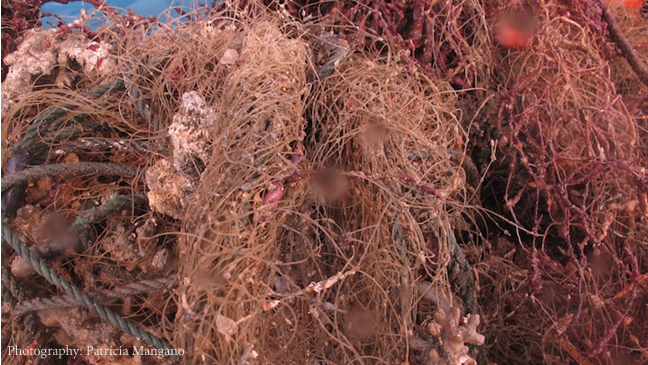
Lost or abandoned nets, longlines, hooks and ropes may remain in the ocean for months or years.
This phenomenon is known as ghost fishing.
Animals can become entangled, while nets may drag across coral and rocky habitat. Fishing debris can also create a serious hazard for scuba divers and boats.
Removing this equipment from deep or current-swept reefs can be extremely difficult and dangerous.
A Historic Net-Removal Effort at Coiba
The original CoibaNationalPark.com documented an impressive example of marine conservation carried out by local dive professionals.
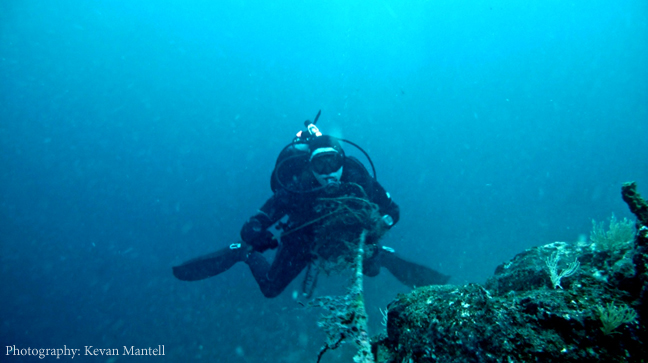
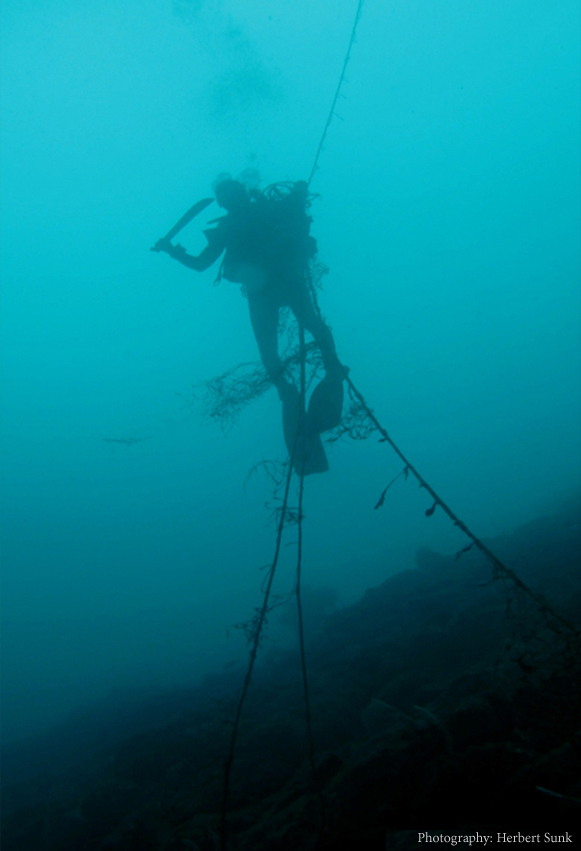
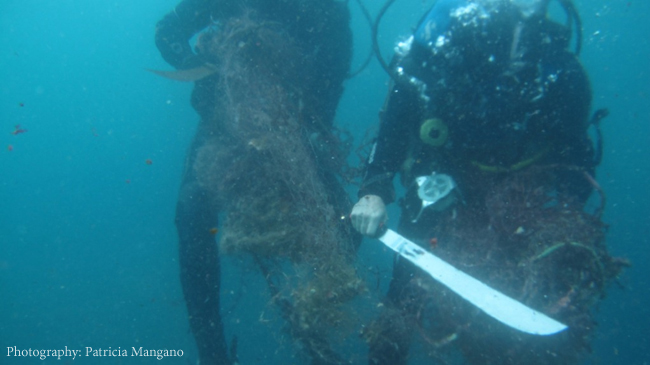
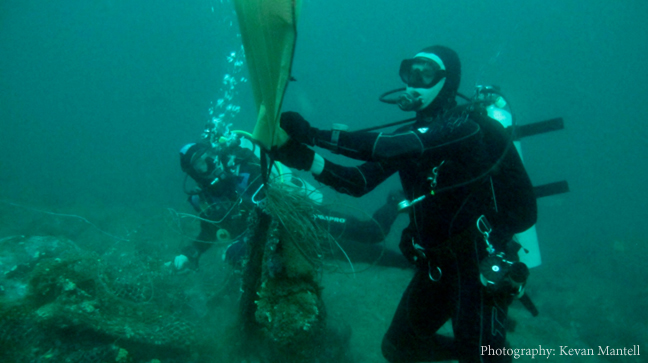
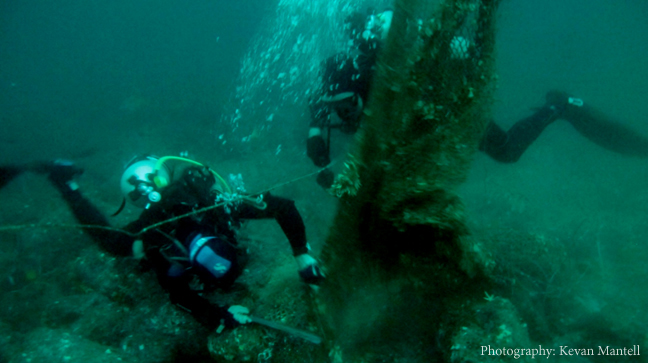
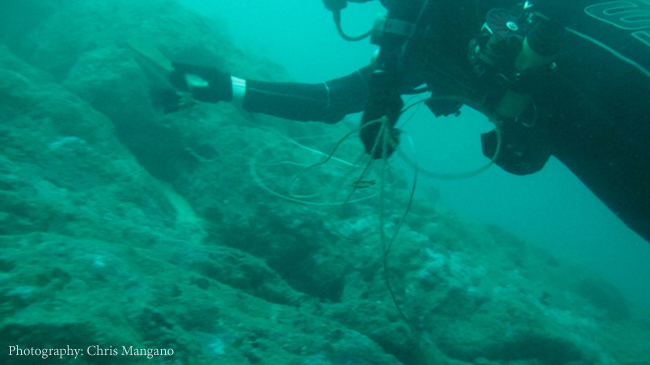
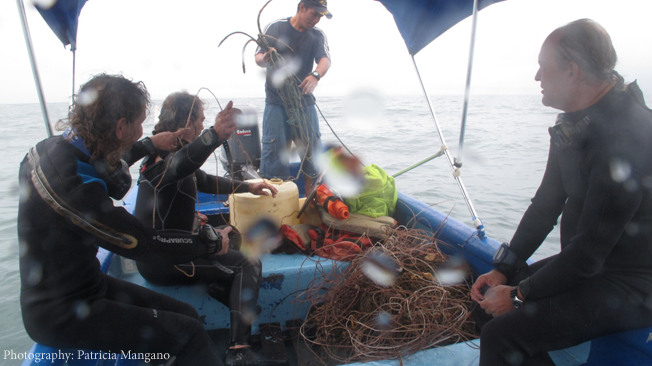
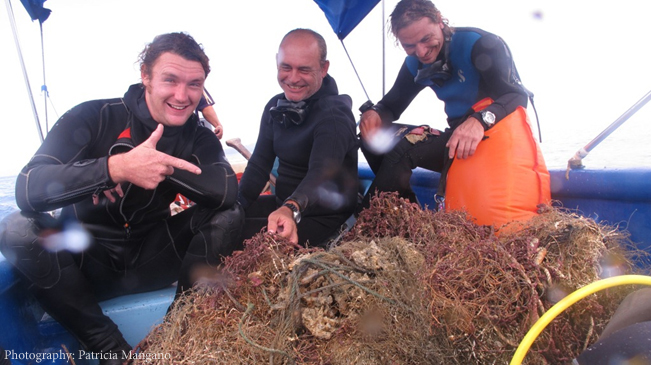
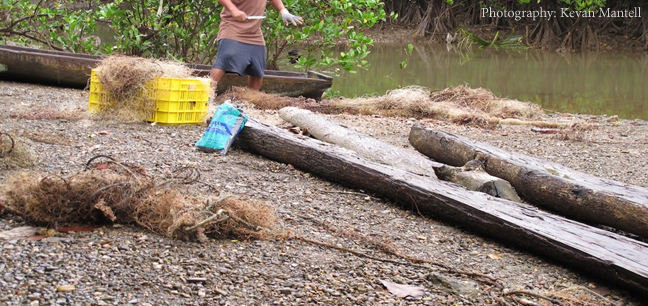
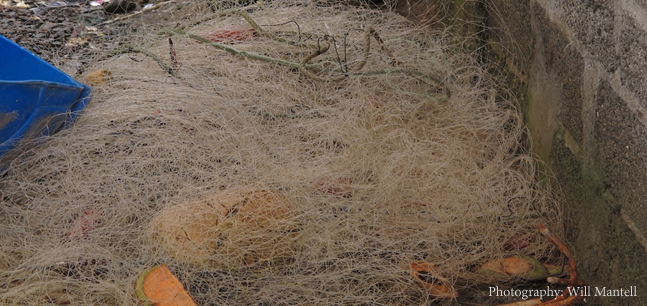
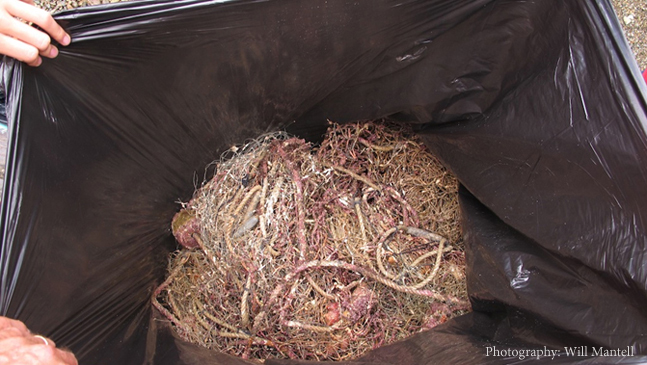
A team of seven professional divers and two assistants including Kevan Mantell, Herbie Sunk, Ben Harris, Adrian Suldana, Chris Mangano, Patricia Mangano, Adrian Sultana, Alfredo de Leon, Luz Tenorio, and Will Mantell worked to remove abandoned monofilament fishing nets, longlines, ropes and other fishing debris from several important dive sites.
The operation included sites known as The Monster, La Ballena, La Montaña Rusa, Bajo Joshua and Isla Iglesias.
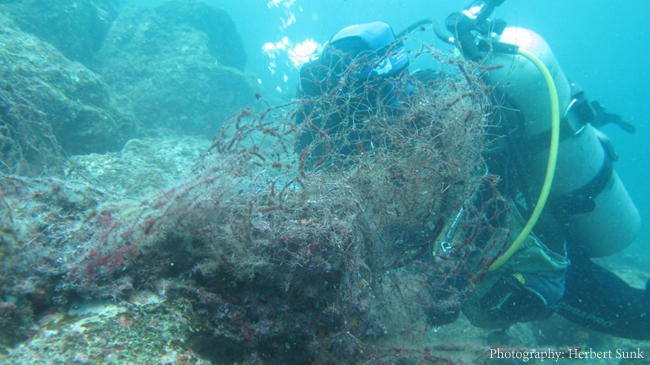
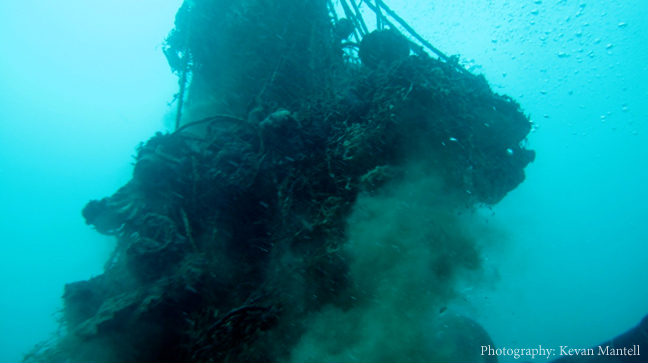
Some of the debris had become entangled around underwater rocks and deep-water coral habitat.
The work required challenging dives in strong currents, including technical dives well beyond ordinary recreational depths.
Removing Nets from the Reef
Removing abandoned fishing gear underwater is not as simple as cutting a net and pulling it aboard a boat.
Fishing line can become wrapped around coral, rocks and other marine organisms.
Pulling indiscriminately can cause additional damage.
During the documented Coiba operation, divers carefully cut sections of net free, attached lift bags and sent the material toward the surface where boat crews could retrieve it.
Longlines, ropes, hooks and other gear were removed at the same time.
The project illustrates how difficult repairing marine damage can be once fishing equipment becomes entangled in habitat.
Bajo Joshua’s Mooring Buoy
The operation also encountered a striking example of how lost fishing gear can affect tourism infrastructure.
A mooring buoy installed at Bajo Joshua had been pulled underwater after becoming tangled in fishing net.
Strong currents had dragged the buoy to significant depth, damaging it and making it unusable.
Divers freed the mooring system and temporarily restored it with a replacement buoy.
Mooring systems are important because they allow dive boats to avoid repeatedly dropping anchors onto sensitive underwater habitat.
Moorings Instead of Anchors
Anchors can cause considerable damage when dropped onto coral or other fragile reef habitat.
A properly designed and maintained mooring system allows boats to secure themselves without repeatedly placing heavy anchors and chains on the seafloor.
Installing moorings is therefore one practical way tourism infrastructure can reduce environmental impact.
But moorings themselves require maintenance and monitoring, particularly in remote areas exposed to powerful currents and weather.
Responsible Scuba Diving
Scuba divers have a direct responsibility for protecting the environments they travel so far to see.
Good buoyancy control is essential.
Divers should avoid touching coral, standing on reefs or allowing fins and equipment to drag across the bottom.
Wildlife should never be chased, handled or blocked for photographs.
Dive operators can reduce their impact by keeping group sizes manageable, briefing divers about environmentally sensitive sites and using mooring systems where available.
Explore Scuba Diving in Coiba →
Responsible Snorkeling
Snorkeling may appear to have almost no environmental impact, but careless behavior can still damage shallow reefs.
Standing on coral, kicking the bottom repeatedly with fins, touching animals and feeding fish can all change or damage the ecosystem.
Visitors should remain horizontal in the water, maintain good control of their fins and avoid entering areas where waves or current make accidental reef contact likely.
Responsible Boating
Boat traffic is unavoidable in a marine park spread across dozens of islands, but boating practices can reduce environmental impact.
Operators should avoid anchoring on coral, control speed in sensitive areas and maintain appropriate distances from marine mammals and other wildlife.
Fuel, oil, garbage and wastewater must never be discharged into protected waters.
Captains familiar with the park can also avoid sensitive habitats and adapt routes to current access restrictions.
Whales and Dolphins
Coiba’s marine conservation story extends to animals that may spend only part of their lives within the park.
Whales and dolphins travel through the Gulf of Chiriquí and wider Tropical Eastern Pacific.
These animals require responsible vessel behavior because repeated close approaches can interrupt feeding, resting or social activity.
Wildlife-watching vessels should follow current Panamanian regulations and allow cetaceans to control the encounter rather than surrounding or pursuing them.
Sea Turtles
Sea turtles connect beaches, coastal habitats and open ocean.
Different life stages may occupy completely different environments, and individual turtles can migrate enormous distances.
Conservation therefore requires protection both where turtles are encountered around Coiba and throughout the wider routes they travel.
Entanglement in fishing gear, accidental capture, marine debris and habitat disturbance remain important concerns for sea turtles worldwide.
Marine Debris
Plastic waste and other marine debris can reach even the most remote islands.
Some debris originates locally, while other material may travel long distances on ocean currents.
Plastic can entangle wildlife or break into smaller fragments that remain in the marine environment for years.
Visitors can help by bringing all waste back to the mainland and by preventing lightweight plastics and packaging from blowing overboard.
In a remote national park, there is no convenient cleanup crew waiting beyond the next beach.
Climate Change and Coral Bleaching
Not every threat to Coiba originates inside Panama.
Rising ocean temperatures associated with global climate change can place coral communities under severe stress.
When temperatures remain unusually high, corals may expel the microscopic algae that provide much of their energy and color.
This produces coral bleaching.
Bleached coral can recover if conditions improve, but prolonged or repeated heat stress can result in mortality.
Because climate change cannot be solved at the park boundary, reducing local pressures such as pollution, physical damage and overfishing becomes even more important.
Resilience Matters
A healthy ecosystem is generally better equipped to survive and recover from disturbance.
Abundant fish populations, intact predator communities and undamaged habitat can improve ecological resilience.
That does not make Coiba immune to climate change.
But reducing preventable local impacts gives reefs and marine populations the strongest possible foundation for responding to environmental stress.
Tourism Can Help—or Hurt
Tourism presents one of the great opportunities for marine conservation.
A living shark may generate economic value repeatedly through diving and wildlife tourism. Healthy reefs support guides, boat operators and coastal businesses. Visitors who experience Coiba often become advocates for its protection.
But poorly managed tourism can produce exactly the opposite effect.
Too many boats, careless anchoring, wildlife harassment, reef contact, garbage and uncontrolled access to sensitive sites can gradually erode the environment visitors came to enjoy.
The objective should therefore be high-value, low-impact tourism rather than simply maximizing visitor numbers.
Local Communities and Conservation
Marine protection works best when communities surrounding the protected area benefit from its success.
Santa Catalina, Pixvae and other Pacific communities are connected economically and culturally to the waters around Coiba.
Guiding, tourism, fishing and conservation can sometimes have competing objectives, making dialogue and practical management essential.
Long-term conservation becomes much stronger when protecting biodiversity also supports sustainable livelihoods.
Rangers on the Front Line
Park rangers are among the most important people in Coiba’s conservation system.
They patrol marine and terrestrial areas, inspect vessels, monitor wildlife, enforce protected-area regulations and respond to reports of illegal activity.
The scale of Coiba makes this difficult.
Hundreds of thousands of hectares of ocean cannot be watched from a single ranger station.
Boats, fuel, communications equipment, radar, trained personnel and cooperation with other authorities are all required for effective enforcement.
Conservation Is an Ongoing Process
World Heritage status does not mean Coiba’s environmental problems have been solved.
UNESCO continues to review the condition and management of the property.
Current priorities include strengthening fisheries regulations, expanding no-take protection, protecting replenishment areas, improving monitoring and enforcement and ensuring that development and tourism do not damage the values for which Coiba received World Heritage recognition.
That ongoing oversight is important.
A protected area should not be judged simply by the law that created it, but by what actually happens within its boundaries decades later.
What Visitors Can Do
Visitors do not need to become scientists or conservation professionals to make a difference.
Simple behavior matters:
- never touch or stand on coral;
- do not chase, feed or handle wildlife;
- take nothing from the park;
- leave no garbage behind;
- respect closed or restricted areas;
- follow current fishing regulations;
- use experienced, responsible tour operators;
- maintain proper distance from whales, dolphins and other wildlife;
- avoid unnecessary plastic waste; and
- report obvious illegal activity to the appropriate authorities.
Marine conservation succeeds through thousands of individual decisions as well as major government policies.
The Value of Leaving Coiba Wild
The greatest thing Coiba offers is not a single shark, reef, beach or dive site.
It is the opportunity to experience a marine ecosystem where many of the relationships between predators, prey, currents and habitats still function on an unusually large scale.
That is becoming increasingly rare.
Protecting Coiba does not mean freezing it in time. Ecosystems naturally change, species move and climate conditions fluctuate.
Conservation means giving those natural processes enough space to continue without being overwhelmed by preventable human pressures.
A Shared Responsibility
Governments establish protected areas. Rangers enforce regulations. Scientists gather evidence. Local communities live alongside these ecosystems. Tour operators introduce visitors to them.
But ultimately, all of those groups depend on the same thing: a healthy ocean.
The abandoned fishing nets documented years ago on Coiba’s reefs were a visible conservation problem. Divers could descend, cut them away and bring them back to shore.
Many modern conservation challenges are harder to see—declining fish populations, changing ocean temperatures, habitat stress and the cumulative effect of thousands of human decisions.
Those challenges require long-term attention rather than a single cleanup operation.
Coiba remains extraordinary because there is still so much worth protecting.
Explore Coiba’s Conservation Story
Learn more about the wider environmental significance of Coiba, the international efforts connecting its waters with the Tropical Eastern Pacific and the wildlife that depends on this remarkable marine ecosystem.
The Environment of Coiba → | Coiba: A Hope Spot → | Scuba Diving → | Hannibal Bank →