
Snorkeling - Coiba National Park
Snorkeling in Coiba National Park
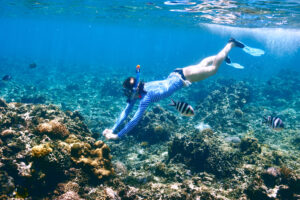 Snorkeling is one of the easiest ways to discover the extraordinary marine life of Coiba National Park. Without tanks, certification or complicated equipment, visitors can slip beneath the surface and enter a completely different world of tropical fish, rocky reefs, coral communities, rays, sea turtles and other marine wildlife.
Coiba’s isolation, protected waters and location within the Tropical Eastern Pacific have created an exceptionally rich marine environment. The national park protects not only its famous islands but also extensive underwater habitats connecting reefs, rocky coastlines, sandy bottoms and deeper Pacific waters.
For many visitors, snorkeling provides their first glimpse of why Coiba is considered one of Panama’s great marine wilderness areas.
Why Snorkel at Coiba?
Coiba is very different from a conventional tropical snorkeling destination.
Rather than snorkeling from a developed resort beach, visitors usually travel by boat between remote islands and protected marine sites. Tropical forest reaches the shoreline, there are few signs of development, and the water beneath you forms part of a much larger functioning ecosystem.
UNESCO recognizes Coiba National Park and its Special Zone of Marine Protection for their exceptional biodiversity and ecological importance within the Tropical Eastern Pacific.
The park provides habitat for hundreds of species of fish as well as sharks, rays, sea turtles, cetaceans and an enormous variety of other marine organisms.
Snorkeling offers an opportunity to experience a small but spectacular portion of that diversity from the surface.
What Can You See?
No two snorkeling trips are exactly alike.
Depending on the site, season and ocean conditions, snorkelers may encounter:
- schools of colorful tropical fish;
- parrotfish and other reef-associated species;
- jacks and larger schooling fish;
- moray eels sheltering among rocks;
- pufferfish and triggerfish;
- rays moving across sandy or rocky areas;
- sea turtles;
- reef sharks and other sharks;
- corals and other reef-building organisms;
- sea stars and other echinoderms; and
- a remarkable variety of smaller marine life.
Wildlife sightings can never be guaranteed. Water temperature, currents, tides, visibility, season and simple luck all influence what appears during a particular snorkel.
That’s part of the attraction: this is a wild ecosystem rather than an aquarium.
Granito de Oro
Granito de Oro has historically been Coiba’s most famous snorkeling destination.
The tiny island lies off the northeastern coast of Isla Coiba and combines a white-sand beach with volcanic rock and shallow marine habitat.
Its small size is deceptive. Beneath the surrounding water lies an environment capable of supporting an impressive concentration of marine life.
Snorkelers have historically encountered schools of tropical fish, moray eels, sea turtles and other reef-associated animals around the island.
Granito de Oro has often been described as a kind of natural aquarium because so much marine life can sometimes be observed within a relatively compact area.
Access to individual visitor sites within Coiba can change for conservation, maintenance or safety reasons. Visitors should therefore confirm that Granito de Oro is currently open before planning a trip specifically around snorkeling there.
Snorkeling at Ranchería
Ranchería Island, also known as Coibita, provides another opportunity to explore Coiba’s shallow marine environment.
The island lies close to Isla Coiba and is known for its beach, tropical vegetation and surrounding marine habitat.
Panama’s park authorities specifically identify Ranchería as a location where experienced visitors can snorkel.
As elsewhere in Coiba, conditions determine the experience. Visibility, currents and marine life can change from one visit to another.
Ranchería is particularly interesting because visitors can experience beach, forest and marine environments within the same relatively small island landscape.
More Than Coral Reefs
When people imagine snorkeling, they often picture a continuous garden of colorful coral.
Coiba’s underwater landscape is more varied.
Rocky reefs and volcanic substrates are an important part of the marine environment, providing surfaces where corals, algae, sponges and other organisms can grow and places where fish can feed, hide and reproduce.
Sandy areas between rocks create habitat for rays and bottom-dwelling animals, while deeper drop-offs nearby allow larger fish to move surprisingly close to shallow snorkeling sites.
This mixture of habitats is one reason snorkeling at Coiba can be so interesting. Even two sites separated by a relatively short boat ride may look completely different underwater.
Coral Communities of Coiba
Coiba protects some of the most significant coral communities in the Eastern Tropical Pacific.
Pacific coral reefs differ from the enormous reef systems many travelers associate with the Caribbean or Indo-Pacific. They exist in a challenging environment influenced by changes in temperature, currents, sediment and periodic oceanographic events such as El Niño.
Despite those challenges, coral communities around Coiba support complex ecosystems of fish and invertebrates.
One of the park’s most important coral environments is Bahía Damas Reef along the eastern side of Isla Coiba.
The health of these coral communities is closely connected to the wider marine ecosystem, making their protection an important part of managing Coiba National Park.
Sea Turtles
Few snorkeling encounters are more memorable than watching a sea turtle move through clear Pacific water.
Sea turtles use the wider Coiba marine environment for feeding, movement and other stages of their life cycles.
A turtle encountered while snorkeling should always be given space.
Never attempt to touch, hold, feed or ride a sea turtle. Instead, remain at a respectful distance and allow the animal to decide where it wants to go.
Often the best encounter is simply floating quietly and watching it disappear into deeper water.
Sharks
For some first-time snorkelers, the possibility of seeing a shark sounds intimidating.
For wildlife enthusiasts, it can be one of the highlights of the trip.
Sharks are a natural and important part of Coiba’s marine ecosystem. The wider World Heritage property supports numerous shark species, ranging from animals associated with reefs and coastal environments to large pelagic species traveling through deeper water.
Which species a snorkeler might encounter depends heavily on location and conditions.
If a shark appears, remain calm, maintain an appropriate distance and follow the instructions of your guide. Never chase or attempt to touch it.
Seeing a wild shark behaving naturally is an opportunity to appreciate an animal that plays an essential role in healthy marine food webs.
Rays
Rays are another group of animals that may be encountered around Coiba.
Different species use sandy bottoms, rocky reefs and open water, and their flattened shape makes them particularly graceful swimmers.
Snorkelers may occasionally see rays resting or moving across the bottom below them.
Larger pelagic rays can also occur within Coiba’s wider marine environment, although encounters depend entirely on location, season and ocean conditions.
As with all wildlife, rays should be observed rather than pursued.
Schools of Fish
Sometimes the most impressive snorkeling experience isn’t a single large animal.
It’s being surrounded by fish.
Coiba’s productive waters can support large schools moving around rocky reefs and island shorelines. Hundreds of small fish changing direction simultaneously can be every bit as spectacular as encountering a turtle or shark.
Predatory fish may patrol the edges of these schools, while smaller reef species remain close to rocks and coral for protection.
Spend time looking closely rather than constantly swimming forward and you’ll begin to notice how many different animals occupy the same small area.
Snorkeling vs. Scuba Diving
You don’t need to be a scuba diver to experience Coiba underwater.
Snorkeling requires far less equipment and training and allows visitors to explore suitable shallow-water habitats while remaining at the surface.
That makes it an excellent option for families, casual swimmers and travelers who simply aren’t interested in scuba certification.
Scuba diving, however, opens access to deeper reefs, underwater pinnacles, walls and offshore sites that cannot realistically be explored from the surface.
Neither experience replaces the other. They reveal different parts of the same marine ecosystem.
Do You Need Snorkeling Experience?
Many visitors can enjoy snorkeling with relatively little previous experience, but being comfortable in the water matters.
Conditions at Coiba are not the same as swimming in a hotel pool. Even at apparently sheltered sites, currents, waves and boat traffic may need to be considered.
Beginners should tell their guide about their experience level before entering the water.
A properly fitted mask, snorkel and fins make an enormous difference, and flotation equipment can provide additional confidence where appropriate.
Anyone uncomfortable with conditions on a particular day should never feel pressured to enter the water.
Ocean Conditions and Visibility
Photographs can make tropical snorkeling look perfectly calm and crystal clear every day.
The Pacific doesn’t work that way.
Visibility at Coiba can vary considerably. Rainfall, plankton, tides, currents, swell and local conditions all influence water clarity.
Interestingly, perfectly clear water isn’t necessarily the sign of the most productive ecosystem. Nutrient-rich water and plankton help support the marine food web that makes Coiba so biologically rich.
Water temperature can also change between sites and depths, particularly where currents bring cooler water upward from deeper parts of the Pacific.
A good guide chooses snorkeling locations according to actual conditions rather than simply visiting the same sites regardless of weather or water quality.
When Is the Best Time to Snorkel?
Snorkeling is possible during much of the year, but there is no single season that guarantees perfect conditions or particular wildlife.
Panama’s Pacific coast has distinct wetter and drier periods, and seasonal changes can affect rainfall, wind, water temperature and visibility.
Marine animals also move according to food availability, reproduction and larger oceanographic conditions.
Rather than choosing a trip based solely on the promise of one species, visitors should think of Coiba as a dynamic ecosystem that offers different experiences throughout the year.
A Typical Snorkeling Trip
Most snorkeling trips to Coiba begin with a boat journey from the mainland.
Once inside the park, guides select snorkeling locations according to the day’s conditions, visitor experience and current access rules.
A day may include several snorkeling sessions at different sites, separated by boat travel, wildlife watching, lunch or time ashore at an approved visitor area.
This variety is one of the strengths of a Coiba excursion. Visitors don’t simply snorkel one reef and leave—they travel through a landscape of islands, forest and open Pacific water throughout the day.
Longer trips can potentially explore a wider variety of marine environments, but even a single day can provide an excellent introduction to the park.
Snorkeling and Wildlife Watching
The wildlife experience begins long before you put on a mask.
During boat journeys between snorkeling sites, visitors may encounter dolphins, sea turtles and seabirds. Humpback whales can also occur in Panama’s Pacific waters seasonally.
Approaching an island may reveal Scarlet Macaws flying above the forest or monkeys moving through vegetation near the shoreline.
That combination of terrestrial and marine wildlife is one of the qualities that makes a snorkeling trip to Coiba different from simply visiting a reef.
Snorkeling and Island Exploration
A snorkeling trip can also provide an opportunity to experience Coiba above water.
Where itineraries and current park access allow, excursions may combine snorkeling with beaches, wildlife observation or visits to designated areas on Isla Coiba and surrounding islands.
Visitors interested in hiking may be able to combine time underwater with one of Coiba’s established forest trails when those trails are open.
This creates an extraordinary contrast: tropical fish and sea turtles beneath the Pacific followed by monkeys and birds beneath the forest canopy.
Protecting Coiba’s Reefs
Snorkeling has relatively little impact when it is done responsibly, but large numbers of visitors can damage sensitive marine environments if basic precautions are ignored.
Never stand on, kick, touch or collect coral.
Coral may look like rock, but it is formed by living organisms and can be damaged by surprisingly little physical contact.
Snorkelers should also avoid touching or feeding fish, turtles, sharks, rays and other wildlife.
Boats should use approved moorings or anchoring practices that do not damage coral habitat, and visitors should follow all instructions from park staff and authorized guides.
Responsible snorkeling means leaving the underwater environment exactly as you found it.
Reef-Safe Practices
A few simple habits can greatly reduce your impact while snorkeling:
- maintain good control of your fins around coral and rocks;
- float rather than stand when adjusting equipment;
- never remove shells, coral or marine organisms;
- do not feed wildlife;
- keep an appropriate distance from turtles, sharks and rays;
- secure loose equipment so it doesn’t drag across the reef;
- follow designated access rules and closures; and
- listen to guides who understand the conditions and protected areas.
These practices protect both wildlife and future snorkeling experiences.
Choosing a Snorkeling Tour
Most visitors explore Coiba with an experienced local boat operator or guide.
When choosing a tour, don’t look only at the number of snorkeling stops.
Ask about group size, safety equipment, guide experience, park authorization and how the operator responds when conditions at a planned site are poor.
A responsible operator should be willing to change the itinerary because of currents, weather, wildlife sensitivity or temporary site closures.
That flexibility isn’t a disadvantage—it is exactly what responsible tourism in a protected wilderness should look like.
What to Bring
Many tour operators provide masks, snorkels and fins, but visitors should confirm exactly what equipment is included before departure.
Useful personal items can include sun-protective clothing, a hat, drinking water, a towel, waterproof protection for electronics and appropriate sun protection.
A rash guard or other lightweight swimming shirt can provide useful protection from the tropical sun while reducing reliance on sunscreen during extended periods in the water.
If you have your own well-fitting mask, bringing it can make the experience considerably more comfortable.
Respect Temporary Closures
Individual islands, reefs, beaches or visitor sites within Coiba may occasionally be closed for conservation, maintenance, research or safety reasons.
These closures should be viewed as part of protecting the park rather than an inconvenience to visitors.
A famous snorkeling location isn’t worth permanently damaging simply so every visitor can see it on a particular day.
Coiba contains many different marine environments, and experienced operators can often adjust itineraries when a particular site isn’t available.
Always follow current instructions from Panama’s environmental authorities and park staff.
A Window into Coiba’s Underwater World
Scuba divers can descend into Coiba’s deeper marine environments, but some of the park’s magic is visible only a few feet beneath the surface.
A mask and snorkel are enough to transform what appears from the boat to be a beautiful tropical island into something much larger: a living ecosystem extending from rainforest and beach into rock, coral and open Pacific water.
You may remember a sea turtle passing beneath you, a shark disappearing along the edge of visibility or an enormous school of fish moving as though it were a single animal.
Or you may simply remember floating quietly above a reef in one of the wildest protected areas in Central America.
Either way, snorkeling is one of the simplest—and most rewarding—ways to understand what makes Coiba National Park extraordinary.
Explore More of Coiba National Park
Combine snorkeling with island exploration, hiking, wildlife watching or kayaking to experience more of Coiba’s remarkable terrestrial and marine environments.
Explore More Things to Do in Coiba → | Discover Granito de Oro → | Explore Bahía Damas Reef → | Explore Tours to Coiba National Park →