
Tours - Coiba National Park
Tours to Coiba National Park
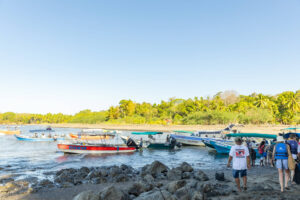 For most travelers, visiting Coiba National Park means taking a boat into one of the wildest protected marine landscapes in Central America.
There are no roads connecting Coiba to mainland Panama, no bridge to the islands and no resort town waiting when you arrive.
The journey itself is part of the experience.
Visitors travel across Panama’s Pacific waters to an archipelago of forest-covered islands, remote beaches, rocky reefs and extraordinarily rich marine habitat.
Depending on the tour, a day at Coiba may include snorkeling, scuba diving, wildlife watching, beaches, hiking, bird watching or simply exploring the islands by boat.
The key is choosing the kind of trip that matches what you most want to experience.
How Do You Visit Coiba National Park?
Most visitors explore Coiba with an organized tour operator, dive operator or experienced boat captain familiar with the national park.
This is generally the most practical way to visit because a Coiba trip involves more than simply hiring a boat.
Operators must consider park admission requirements, approved visitor locations, marine conditions, navigation, safety equipment and current access restrictions.
A knowledgeable operator can also adapt an itinerary when weather, waves, currents or temporary conservation closures make a planned location unsuitable.
In a remote protected area, local experience matters.
Santa Catalina: The Main Gateway to Coiba
Santa Catalina on Panama’s Pacific coast has become one of the principal gateways to Coiba National Park.
The small coastal community is already internationally known for surfing, but it also serves as an important departure point for snorkeling, scuba diving, wildlife and island excursions into Coiba.
Numerous local operators organize trips from Santa Catalina, making it one of the easiest places for independent travelers to arrange a visit.
Boats depart directly from the Pacific coast and travel west toward the national park.
The exact journey time depends on the boat, sea conditions and destination within the park.
The Boat Ride Is Part of the Adventure
Don’t think of the crossing simply as transportation.
The Pacific journey between the mainland and Coiba can provide wildlife encounters of its own.
Dolphins may appear alongside or ahead of the boat. Sea turtles can surface unexpectedly, while seabirds travel between feeding areas and islands.
During appropriate seasons, humpback whales may also be encountered in Panama’s Pacific waters.
As Coiba approaches, the landscape changes dramatically.
Forested islands rise from the ocean with remarkably little coastal development, providing the first hint that you’ve entered somewhere very different from an ordinary beach destination.
Other Departure Points
Santa Catalina is not the only possible access point.
Historically, visitors and operators have also reached Coiba from areas including Puerto Mutis and Playa Banco.
MiAmbiente has identified Santa Catalina, Puerto Mutis and Playa Banco among established departure locations for visitors entering the national park.
Which departure point makes the most sense depends on where you are staying, the type of trip you are taking and the operator organizing the excursion.
For most international leisure travelers, however, Santa Catalina offers the largest concentration of tourism services specifically oriented toward visiting Coiba.
Day Trips to Coiba
A day trip is the most common way to experience Coiba National Park.
Visitors generally depart early in the day, travel by boat to the park, visit several sites and return to the mainland later that afternoon.
A typical itinerary may combine:
- snorkeling at suitable marine sites;
- scuba diving for certified divers;
- wildlife watching from the boat;
- visits to approved beaches;
- island exploration;
- bird watching;
- short hikes where trails are open; and
- time to enjoy the extraordinary scenery of the archipelago.
The exact itinerary should remain flexible.
Coiba is a natural environment, and the best tour is not necessarily the one that follows a rigid schedule regardless of conditions.
What Can You See in One Day?
A single day cannot reveal everything Coiba has to offer.
But it can provide a remarkable introduction.
Within a few hours, visitors can potentially move between tropical forest, sandy beaches, rocky island coastlines and underwater habitats filled with marine life.
You may spend the morning snorkeling above fish and rays, eat lunch within sight of rainforest and encounter dolphins during the boat trip between islands.
That combination of environments is one of the great strengths of a Coiba day trip.
Rather than visiting one attraction, you experience part of an entire ecosystem.
Snorkeling Tours
Snorkeling is one of the most popular activities for visitors who want to experience Coiba underwater without scuba certification.
Suitable shallow-water environments can support tropical fish, rays, sea turtles, reef-associated sharks and numerous smaller marine organisms.
Rocky reefs and coral communities create habitat that may look dramatically different from one snorkeling location to another.
Good operators select sites according to visibility, current, waves and current park access rather than promising that every trip will visit exactly the same reef.
Explore Snorkeling in Coiba National Park →
Scuba Diving Tours
For certified divers, Coiba offers an entirely different perspective.
Scuba diving opens access to deeper rocky reefs, underwater pinnacles, slopes and offshore structures where large schools of fish, sharks, rays and sea turtles may be encountered.
Coiba is particularly famous for the abundance of marine life surrounding many dive sites.
Some dives can be suitable for relatively inexperienced certified divers in appropriate conditions, while others involve current, depth or remoteness that makes them better suited to experienced divers.
Operators should match dive sites to both environmental conditions and diver ability.
Explore Scuba Diving in Coiba National Park →
Wildlife and Ecotours
You don’t need to enter the water to appreciate Coiba’s biodiversity.
Wildlife-focused tours can combine boat travel with opportunities to observe birds, monkeys, dolphins, sea turtles and other animals.
When trails and visitor locations are available, a tour may also include time beneath the forest canopy.
Because many animals are active at different times and locations, wildlife tours should be approached with curiosity rather than a checklist.
No responsible guide can guarantee that a particular wild animal will appear.
Explore Wildlife & Ecotours in Coiba →
Bird-Watching Tours
Coiba is also an exceptional destination for bird watchers.
The isolation of the islands has produced distinctive bird populations, including the Coiba Spinetail, while the forests provide refuge for species such as Scarlet Macaws.
Seabirds and coastal species add another dimension to the experience.
Birding may take place from boats, beaches, forest edges and established trails.
Dedicated bird-watchers should tell their operator in advance that birds are a priority so the itinerary can be planned accordingly.
Explore Bird Watching in Coiba →
Kayaking
Where conditions and regulations permit, kayaking provides a quieter way to experience Coiba’s coastal environment.
Paddling can reveal sheltered bays, mangroves and forested shoreline from a completely different perspective than traveling by motorboat.
Because currents, tides and weather can change quickly, kayaking routes should be selected by guides familiar with local conditions.
Beaches and Island Stops
Coiba contains numerous beaches, but they should not all be treated as recreational landing sites.
Some are sensitive wildlife habitat, while others may be closed or restricted for conservation, safety or management reasons.
Tour operators should use approved visitor areas and follow current instructions from park authorities.
Where landing is permitted, the contrast is extraordinary: tropical forest behind you, Pacific water in front of you and often very little evidence of the developed world.
Visiting Isla Coiba
Isla Coiba is the enormous central island from which the park takes its name.
It contains tropical forest, beaches, mangroves, rivers and remnants of the penal colony that operated on the island during much of the twentieth century.
Some tours include stops at designated areas on Isla Coiba, although specific locations and facilities available to visitors can change.
The island is much larger than most visitors expect, and a short tour reveals only a small portion of it.
Granito de Oro
One of Coiba’s most famous visitor locations is Granito de Oro, a tiny island off the northeastern coast of Isla Coiba.
Its white sand, volcanic rock and surrounding shallow marine habitat have historically made it one of the park’s best-known snorkeling stops.
Because heavily visited reefs sometimes require temporary conservation restrictions, visitors should never assume that Granito de Oro—or any individual site—will necessarily be available on the day of their tour.
An experienced operator should be able to substitute another suitable location when access is restricted.
Ranchería Island
Ranchería, also known as Coibita, is another important visitor location near Isla Coiba.
The island combines beach, tropical vegetation and shallow marine habitat and has also played an important role in scientific research associated with Coiba.
Depending on current access and itinerary, visitors may experience Ranchería as part of snorkeling, wildlife or island-exploration trips.
Can Tours Visit Hannibal Bank?
Hannibal Bank is dramatically different from Coiba’s beach and island destinations.
It is a massive submerged underwater formation west of Isla Coiba surrounded by deep Pacific water.
There is nowhere to go ashore because the bank never reaches the surface.
Specialized fishing and advanced diving trips have historically visited the area, but Hannibal Bank is also an important conservation and replenishment zone subject to protected-area regulations.
Visitors should only travel there with appropriately experienced operators and should verify what activities are currently permitted.
Can You Stay Overnight on Coiba?
Older travel guides frequently describe basic visitor cabins at the former ANAM ranger station on Isla Coiba.
Visitors should not rely on that historical information when planning a modern trip.
Accommodation arrangements, park facilities and overnight access have changed over time.
Panama’s current protected-area reservation system lists Coiba National Park for visitor admission rather than camping.
Anyone considering an overnight or multi-day itinerary should therefore confirm current permitted arrangements through MiAmbiente and the operator organizing the trip.
Multi-Day Coiba Trips
A multi-day trip can potentially provide access to a wider variety of environments than a single day excursion.
It also allows operators more flexibility to adapt to changing marine conditions and potentially travel farther within the broader Coiba region.
However, multi-day does not automatically mean sleeping inside the national park.
Trips may use boats or legal accommodations outside protected overnight areas depending on the itinerary and current regulations.
Before booking, ask exactly where each night will be spent and what permits or approvals apply.
Do You Need a Reservation?
Coiba is a protected national park, not an unrestricted recreational island.
Visitor admission is managed by Panama’s Ministerio de Ambiente (MiAmbiente).
Panama now operates an official reservation system for protected areas that includes Coiba National Park.
Tour operators commonly coordinate the necessary visitor arrangements as part of an organized excursion, but travelers should confirm this when booking.
Do not assume that simply arriving at the beach and hiring any available boat automatically provides legal access to the park.
Park Admission and Fees
Admission fees and administrative procedures can change.
For that reason, this site does not publish a fixed park-entry price that may become outdated.
Visitors should check current MiAmbiente requirements or confirm the applicable fee with their operator when making a reservation.
Ask whether the advertised tour price includes:
- Coiba National Park admission;
- boat transportation;
- guide services;
- snorkeling or diving equipment;
- meals and drinking water;
- taxes or service charges; and
- any activity-specific fees.
A cheap advertised price may not represent the full cost if important charges are added later.
Bring Identification
Visitors should travel with the identification required for their park registration.
For international travelers, that will normally mean having the appropriate passport information available.
MiAmbiente’s reservation procedures require visitor details so park staff can register and control entry into the protected area.
Your operator should explain exactly what information is required before departure.
Visitor Numbers Are Managed
Protected areas have limits.
Coiba’s public-use planning includes measures intended to control the number of people using particular visitor locations.
This helps reduce pressure on beaches, trails and marine environments while also improving visitor safety.
During busy periods, advance planning is therefore particularly important.
Capacity limits are another reason not to treat access as something that can always be arranged at the last minute.
Choosing a Tour Operator
There is a big difference between someone who owns a boat and an experienced operator prepared to take visitors into a remote marine national park.
Before booking, ask questions.
A responsible operator should be able to explain:
- how park admission is arranged;
- where the trip will depart;
- what activities are included;
- what safety equipment is carried;
- how many passengers travel in each boat;
- whether guides are included;
- what happens if marine conditions deteriorate;
- whether food and drinking water are provided;
- what wildlife practices the operator follows; and
- how temporary park closures or site restrictions are handled.
An operator who promises that weather never affects the itinerary or guarantees encounters with particular wildlife should be treated cautiously.
Small Boats and Pacific Conditions
Many Coiba excursions use relatively small open boats appropriate for moving quickly between islands and shallow landing areas.
That can make the trip exciting, but it also means visitors are exposed to Pacific conditions.
Wind and swell can make the ride wet and bumpy.
People with significant back, neck or mobility problems should discuss boat conditions with the operator before booking.
Travelers who are prone to motion sickness may also want to prepare before departure rather than waiting until the boat is already underway.
Weather Matters
Coiba lies in a tropical Pacific environment where weather can change rapidly.
Heavy rain, thunderstorms, high winds and increased swell can affect navigation and recreational activities.
Panamanian authorities may temporarily restrict boat departures or close the park when conditions make navigation unsafe.
This is an important part of responsible management.
A canceled Coiba trip can be disappointing, but no wildlife encounter or beach visit is worth ignoring dangerous marine conditions.
Dry Season and Rainy Season
Panama’s Pacific coast experiences distinct wetter and drier periods.
The drier months often provide sunnier weather, although wind and ocean conditions can still vary.
The wetter part of the year brings greener landscapes and dramatic tropical weather but also a greater likelihood of rain.
Neither season automatically produces better wildlife encounters.
Marine life responds to water temperature, currents, food availability and reproductive cycles rather than the convenience of a tourism calendar.
When Is the Best Time to Visit Coiba?
There isn’t one universal “best” month.
The answer depends partly on what you want to experience.
Divers may value particular ocean conditions or seasonal marine species. Whale watchers may be interested in periods when humpback whales are present. Bird watchers may prioritize terrestrial wildlife, while casual visitors may care most about comfortable boating conditions.
Instead of searching for a single perfect month, consider the activity that matters most to you and ask an experienced operator what conditions are typically like during your planned visit.
Wildlife Is Never Guaranteed
Coiba is famous for extraordinary wildlife, but it is important to understand what that means.
You are entering a wild ecosystem—not visiting an aquarium or zoo.
Dolphins may appear or they may not. A snorkeler may see a turtle on one trip and none the next. Divers may encounter sharks, rays or huge schools of fish, while another dive at the same location can be completely different.
That unpredictability is part of what makes Coiba genuine.
Responsible operators describe wildlife encounters as possibilities rather than guarantees.
Humpback Whales
Humpback whales visit Panama’s Pacific waters seasonally.
During those periods, visitors traveling to or through the Coiba region may have an opportunity to encounter them.
Whale-watching must be conducted responsibly.
Boats should maintain legally required distances, avoid surrounding animals and never pursue whales aggressively for photographs.
Encounters are particularly sensitive when mothers are traveling with calves.
Dolphins
Dolphins are another exciting possibility during boat travel around Coiba.
They may appear during the crossing from the mainland or while traveling between islands.
As with whales, boats should allow the animals to determine the encounter rather than repeatedly changing course to chase them.
A spontaneous group of dolphins approaching a moving boat is very different from a captain cornering or pursuing animals for passengers.
Sea Turtles
Sea turtles may be encountered both above and below the surface.
Boat passengers may see them briefly as they surface to breathe, while snorkelers and divers can occasionally observe them feeding or traveling underwater.
Never attempt to touch, feed or restrain a sea turtle.
The best wildlife experience is one in which the animal behaves exactly as it would if you were not there.
Sharks and Rays
Coiba’s protected waters support an extraordinary diversity of sharks and rays.
Some species are associated with reefs, while others inhabit deeper or more open water.
Which animals appear depends on the location, season and environmental conditions.
Seeing a shark or ray in the wild can be one of the most memorable parts of a Coiba trip, but visitors should give these animals space rather than attempting to approach closely for photographs.
What Should You Bring?
A day on Coiba involves sun, saltwater, tropical weather and significant time outdoors.
Useful items generally include:
- sun-protective clothing;
- a hat and sunglasses;
- appropriate sunscreen;
- drinking water if not supplied by the operator;
- a swimsuit and towel;
- a lightweight rain layer;
- a dry bag or waterproof protection for electronics;
- personal medication;
- motion-sickness medication if needed; and
- the identification required for park entry.
Ask your operator what snorkeling, diving or safety equipment is already included before bringing unnecessary gear.
Protect Yourself from the Sun
The tropical sun can be intense, and reflection from the Pacific increases exposure.
A lightweight long-sleeved shirt or rash guard can provide excellent protection while snorkeling or traveling by boat.
This can also reduce the amount of sunscreen needed while you are in the water.
Reapply sun protection appropriately throughout the day, particularly after swimming.
Food and Water
Facilities inside Coiba are limited compared with conventional tourist destinations.
Do not assume you will find restaurants, shops or bottled water when you arrive.
Many organized tours provide lunch and drinking water, but this should be confirmed in advance.
Bring enough hydration for a full tropical day, particularly if your itinerary includes hiking, kayaking or multiple dives.
There Are No Convenience Stores in the Wilderness
Part of Coiba’s appeal is its lack of development.
That also means you need to arrive prepared.
If you forget medication, a charger, specialized food or another important personal item, there may be no practical way to replace it once the boat reaches the park.
Think of Coiba as a remote wilderness excursion rather than a day at a developed beach club.
Facilities Within the Park
Visitor infrastructure exists in designated parts of the park, but facilities should be considered limited.
MiAmbiente maintains administrative and visitor-management operations on Isla Coiba, and approved visitor areas may provide basic services.
However, facilities can be affected by maintenance, construction or temporary closures.
Travelers should therefore rely on their operator for current information rather than planning around descriptions from old travel guides.
The Former Penal Colony
For much of the twentieth century, Isla Coiba was home to one of Panama’s most notorious penal colonies.
The prison closed in 2004, leaving behind structures and historical sites that remain part of the island’s cultural story.
Access to former prison areas has changed over time and may be restricted because of safety, conservation or restoration work.
Visitors specifically interested in prison history should confirm current access before booking a tour around that expectation.
Discover the History of Coiba’s Prison →
Trails and Hiking
Several established trails have historically allowed visitors to experience Coiba’s forest environment.
These include trails associated with Los Monos, Gambute and Los Pozos Termales.
Trail availability can change because of maintenance, weather or park-management decisions.
Some may be open while others are temporarily unavailable.
Operators planning hikes should confirm current access before departure.
Explore Coiba’s Trails and Wildlife →
Responsible Tourism
Every visitor to Coiba enters a globally important protected area.
The World Heritage designation does not turn the park into an attraction designed around tourists.
Tourism is permitted because people can experience Coiba without destroying the ecological values that make it important.
That only works when visitors and operators accept limits.
Respect Closures
A beach, reef, trail or island may occasionally be closed.
The reason might be wildlife protection, habitat recovery, maintenance, unsafe conditions or scientific work.
A closure should not be treated as something an operator can simply ignore because a guest wants to see a famous location.
Protecting Coiba sometimes means temporarily keeping people out of part of it.
Don’t Take Souvenirs from the Park
Leave shells, coral, rocks, plants and other natural objects where you find them.
A shell that appears empty may provide habitat for another animal later.
Coral fragments remain part of the reef ecosystem even after they break naturally.
The best souvenir from Coiba is a photograph—not part of the park itself.
Leave Wildlife Wild
Never feed monkeys, birds, fish or other wildlife.
Feeding changes natural behavior and can make animals dependent on or aggressive toward visitors.
Wild animals should also never be touched, handled or deliberately cornered for photographs.
Give them space and allow the encounter to happen naturally.
Take Your Waste Back with You
Everything you carry into Coiba should leave with you unless it is disposed of through an approved park facility.
Plastic packaging, fishing line, food wrappers and bottles can persist in the environment for years.
Remote islands receive enough marine debris from ocean currents without visitors adding more.
Why Tour Quality Matters
A good Coiba guide does more than drive a boat.
Experienced guides explain what visitors are seeing, identify wildlife, understand currents and tides, respect protected areas and recognize when environmental conditions require changing plans.
That knowledge can transform a beautiful boat ride into an understanding of why Coiba matters.
The best tour should leave you knowing more about the ecosystem than when you arrived.
Coiba Is Not an Amusement Park
One of the easiest mistakes to make when planning a trip is assembling a checklist:
Granito de Oro. Shark. Turtle. Monkey. Whale. Prison. Beach.
Coiba does not work that way.
The ocean decides whether visibility is excellent. Wildlife decides whether it appears. Park authorities decide which locations are open. Weather decides whether the boat can travel safely.
A good itinerary responds to those realities rather than fighting them.
Visitors who arrive with that mindset often discover that the unexpected parts of the day become the most memorable.
A UNESCO World Heritage Experience
Coiba National Park and its Special Zone of Marine Protection have been recognized as a UNESCO World Heritage Site since 2005.
The designation recognizes extraordinary terrestrial and marine biodiversity as well as Coiba’s important role within the Tropical Eastern Pacific.
UNESCO reports that the property supports hundreds of marine fish species, dozens of shark species and numerous cetaceans.
Visiting Coiba is therefore not simply taking an island excursion.
It is entering a place considered important to the natural heritage of the world.
Why Coiba Is Worth the Journey
Coiba requires effort.
You have to travel to Panama’s Pacific coast, get on a boat, cross open water and accept that weather and wildlife may not cooperate perfectly with your plans.
But that effort is part of why the experience remains so special.
There are no highways through the park and no line of beachfront hotels surrounding its most famous reefs.
Instead, there are forested islands, open Pacific water, wild animals and underwater ecosystems that continue to function on a remarkable scale.
The goal of a Coiba tour isn’t simply to reach an island.
It is to spend a day inside one of Panama’s greatest remaining wilderness areas.
Plan Your Coiba Adventure
Choose your trip based on the experience that interests you most, then allow enough flexibility for Coiba to surprise you.
Snorkel its shallow marine environments. Dive among schools of fish. Watch Scarlet Macaws cross the forest. Search the Pacific for dolphins. Walk an open trail. Sit on a beach with rainforest behind you.
No single tour can show you all of Coiba.
But even one well-planned day can make it easy to understand why so much effort goes into protecting it.
Things to Do in Coiba → | Snorkeling → | Scuba Diving → | Wildlife & Ecotours → | The Environment →